How to Transpose a Chord Chart: A Step-by-Step Guide
October 27, 2026
· The Music Planner Team
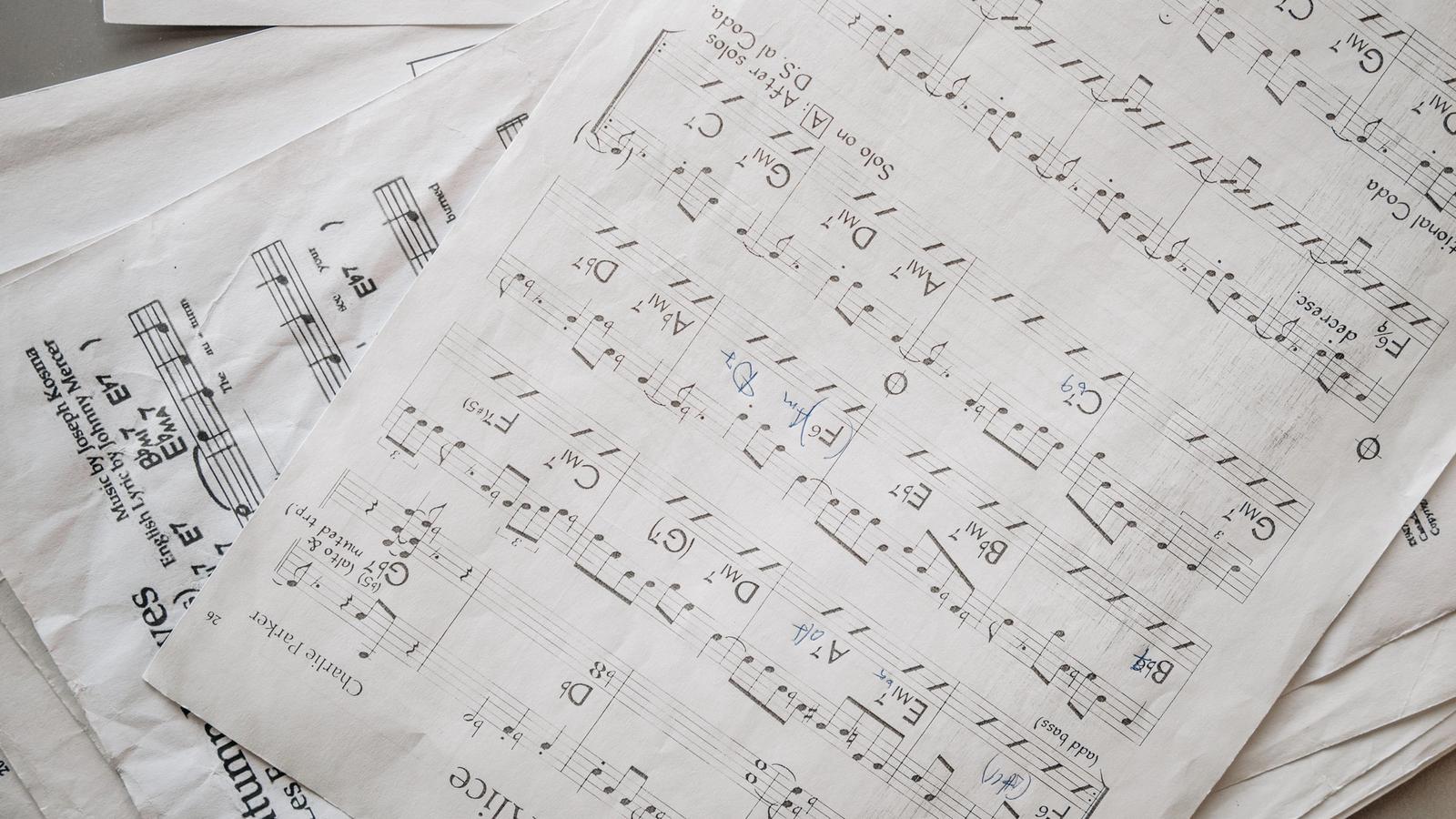
The short answer: count how many semitones (half steps) it is from the old key to the new one, then move every chord in the chart by that same number. The chord types stay the same - a minor chord stays minor, a 7th stays a 7th. That's the whole trick. The rest of this guide is the detail that keeps you from getting it wrong at 11pm the night before a gig.
Why bands transpose charts
The key a song was recorded in suited the original singer's voice, not necessarily yours. Most transposing happens for one of three reasons:
- The singer can't reach the chorus, or it sits so low it disappears in the mix.
- A guitarist wants open chord shapes instead of a barre-chord marathon.
- Two songs in a set sit next to each other, and moving one makes the transition smoother.
If you're picking keys for a whole set, our guide to building the perfect setlist covers how keys shape the flow of a show.
Step 1: Learn the 12 notes
Western music uses 12 notes, and after the twelfth it starts again. Written with sharps, they go:
C, C#, D, D#, E, F, F#, G, G#, A, A#, B, then back to C.
Each step in that list is one semitone. Two things to remember: there is no sharp between E and F, or between B and C. And every sharp has a flat name too - C# is the same note as Db, F# is the same as Gb, and so on.
Step 2: Count the distance between keys
Find the old key and the new key in the list and count the steps between them. From G to A is two semitones up (G, G#, A). From E to C is four semitones down (E, D#, D, C#, C). Either direction gives the same chord names: moving up 8 semitones lands on exactly the same chords as moving down 4, so count whichever way is shorter.
Step 3: Move every chord by the same amount
Take each chord's root note and move it the same number of semitones. Leave everything after the root alone.
- G becomes A (up 2)
- Em becomes F#m (up 2, still minor)
- Cmaj7 becomes Dmaj7 (up 2, still a major 7th)
- D/F# becomes E/G# - with slash chords, move both the chord and the bass note
That last one catches people out. If you only move the chord, D/F# becomes E/F#, which is a different and very wrong sound.
Step 4: Choose sharps or flats
A# and Bb are the same note, but one of them will look right in your new key and the other will look like a typo. A simple rule: sharp keys (G, D, A, E, B) use sharps, and flat keys (F, Bb, Eb, Ab, Db) use flats. A chart in Eb should say Ab, not G#. Consistent spelling is what lets a player read a chart at a glance.
A worked example: G to A
A verse in G that goes G - Em - C - D moves up two semitones to A - F#m - D - E. A bridge with Am - C/G - D becomes Bm - D/A - E. Every chord moved by two, every chord type stayed the same, and both halves of the slash chord moved together.
The capo math guitarists need
A capo raises every string by one semitone per fret. So the shapes you play and the key the band hears are different things:
- Sounding key = the key of your shapes + the capo fret.
- G shapes with a capo on 2 sound in A.
- To play in Bb with easy shapes, use G shapes and capo 3, or A shapes and capo 1.
This is why a chart should always say which key is sounding. A guitarist with a capo and a keys player reading the same chart need to agree on what the band actually hears.
Or skip the letters: Nashville numbers
The Nashville number system writes chords as numbers instead of letters: in the key of G, G is 1, C is 4, D is 5 and Em is 6m. A song that goes 1 - 6m - 4 - 5 is the same chart in every key. Change the key and nobody has to rewrite anything. Many session players and worship teams read numbers for exactly that reason.
Common transposing mistakes
- Forgetting the bass note in slash chords.
- Mixing sharps and flats in the same chart.
- Transposing the chart but not the setlist, so half the band shows up in the old key.
- Writing the original key on the setlist when you play it somewhere else.
- Moving the chart but practicing to a recording in the old key.
Transposing in Music Planner
In Music Planner, transposing a chart is one click. Chord charts transpose to any key, the capo picker suggests a fret with easy shapes while showing the key the band hears, and any chart can switch to Nashville numbers. On a setlist, each song can have its own key for that gig without changing the song itself, and practice audio plays back in that key too.
Want to try it on a real chart? Start free with Music Planner - your first band is free.
Frequently asked questions
Is a capo on fret 2 the same as transposing up two semitones?
For the sound, yes: G shapes with a capo on 2 sound exactly like A. The difference is what you read. With a capo you read G shapes; with a transposed chart you read A chords.
How do I find out what key a song is in?
Look at the first and last chords - songs usually start or end on the key chord. The chord that feels like home, where the song could stop and sound finished, is almost always the key.
Should I transpose up or down?
Whichever puts the highest note of the melody where your singer is strong. Have them sing the chorus at a few different keys in rehearsal and pick the one that sounds easy, not just possible.
Can I transpose a PDF chord chart?
Not by editing the PDF itself in most tools. Type or paste the chart as text instead, and transposing becomes automatic.