How to Build the Perfect Setlist: A Step-by-Step Guide for Bands
June 29, 2026
· The Music Planner Team
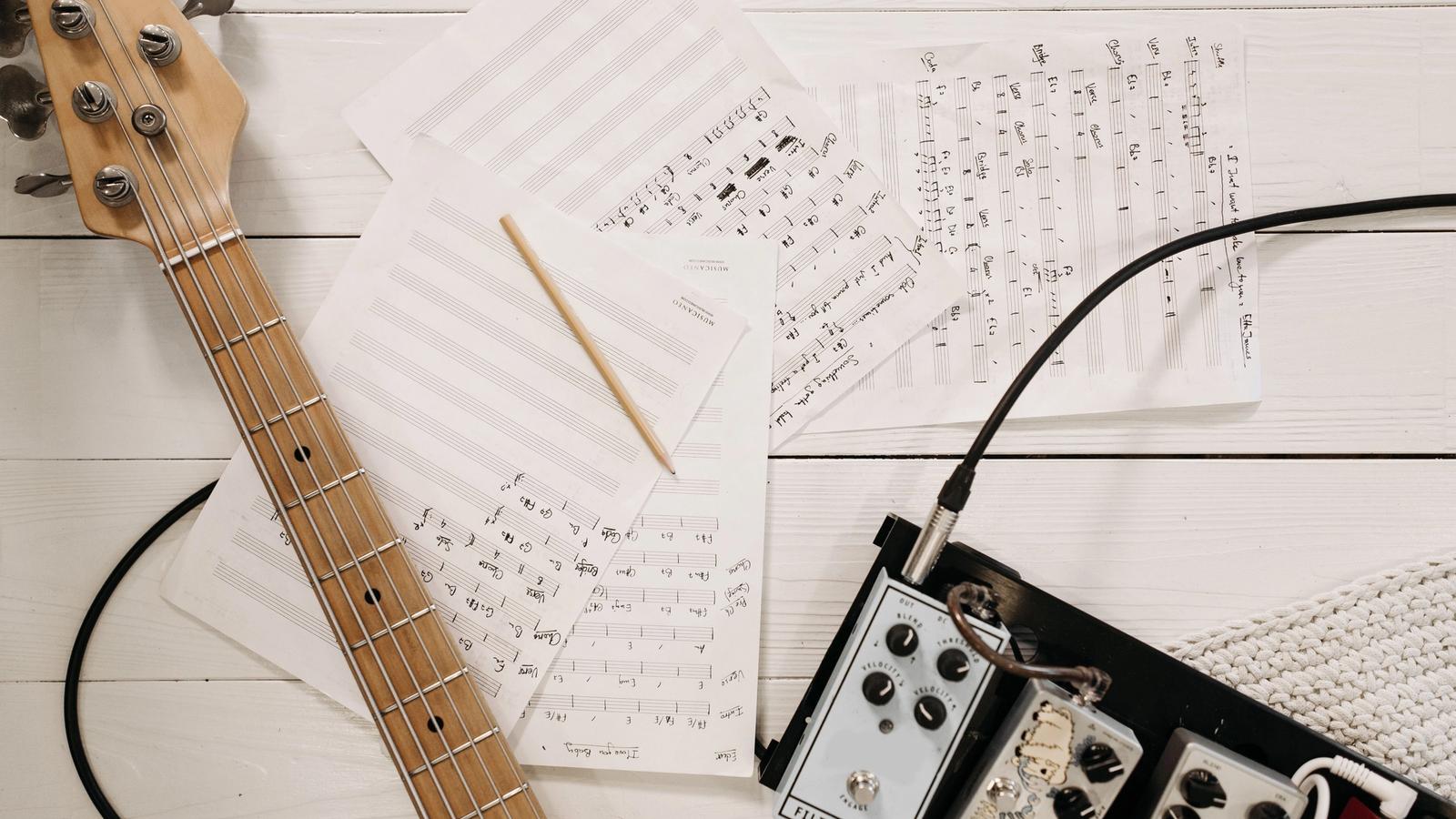
Ask ten bands how they build a setlist and you'll get ten different answers — usually involving a group chat, a few crossed-out scraps of paper, and a last-minute argument backstage. A great setlist isn't a list of your favourite songs. It's a plan for the room you're walking into. Here's a repeatable way to build one.
Start with the gig, not the songs
Before you pick a single track, get clear on the context. A 45-minute support slot, a three-hour wedding, and an acoustic brunch set are three completely different jobs. Ask:
- How long do we play, and how many songs is that realistically?
- Who's the audience, and what do they actually want to hear?
- Is this a listening crowd or a dancing crowd?
- Are there hard stops, breaks, or specific moments to hit (first dance, last call)?
Answer those first and half your decisions are already made for you.
Open strong, close stronger
Your first song sets the tone and your last song is what people remember. Open with something tight and confident that you can nail cold — not your most complex arrangement. Close with the song that gets the biggest reaction, the one people will be humming on the way home. Save it; don't burn it three songs in.
Shape the energy across the whole set
Think of the set as an arc rather than a playlist. You don't want a flat wall of high-energy bangers any more than you want six ballads in a row. A reliable shape: open high, settle into a groove, build a peak in the back half, give one genuine breather, then finish on your strongest moment. Mark each song's energy level when you plan, and you'll spot a sagging middle before you're standing on stage discovering it.
Connect your songs — don't hard-reset between every one
The fastest way to kill momentum is the accidental dead stop: a song ends, there's a beat of silence, someone tunes, the drummer waits, the singer mumbles "uh, thanks" — and the energy you spent three songs building leaks straight out of the room. The fix isn't playing faster. It's deciding, in advance, which gaps are transitions and which are genuine stops.
A few ways to connect two songs instead of stopping between them:
- Roll straight in. The instant one song ends, the drummer counts the next one off — no gap, no chatter.
- Use the next song's intro as a bridge. Start the intro riff, pad, or arpeggio under the tail of the previous song — or under the applause — so the new song is already breathing before the old one has fully landed. The crowd feels one continuous moment, not two separate songs.
- Hold a chord or pad. A keys player or guitarist sustains a chord that resolves into the next song's key, smoothing over what would otherwise be a jarring change.
- Medley two or three. For songs that share a feel or key, stitch them into one uninterrupted run. It's often the highlight of the set.
Then be deliberate about your hard resets, because stopping fully is a tool — not a failure. Use a real stop to land a big moment, take an honest breather, retune, swap instruments, or talk to the crowd. Cluster the practical stuff — capo changes, re-tunes, the song that needs a different guitar — at those planned stops so they're not ambushing you mid-flow. The difference between a pro set and an amateur one is that the pro *chose* every stop; the amateur just kept stopping because nobody planned the joins.
So on your setlist, mark each gap: segue or stop.
Think in keys (and plan your key changes)
Keys are the hidden architecture of a good set. Two songs in the same key flow into each other almost automatically; two songs a tritone apart can feel like a car changing gear without the clutch. You don't need a theory degree — just a bit of intention.
- Group by key where you can. Songs in the same key, or closely related ones (a fourth or fifth away, or the relative minor), sit naturally side by side — and as a bonus you'll retune and change capos far less.
- Use key to control energy. Nudging the key up a step later in the set is a classic way to lift energy without speeding everything up. Bouncing randomly between distant keys, by contrast, makes a set feel restless.
- Bridge the big jumps. When you do need to move between distant keys, smooth it: hold the V chord of the new key for a bar as a pivot, let a pad resolve into it, or drop in a single well-placed drum fill to "re-set the ear" so the new key lands as a lift instead of a lurch.
- Pick keys for your singer, not the record. This is the one cover bands and wedding bands get wrong most often. The original key suited the original artist's voice — not necessarily yours. Transpose songs to where your vocalist is comfortable and powerful, then build your key-flow around those choices. A song nailed in the "wrong" key beats a song strained in the "right" one every time.
A worked example. Say your up-tempo block ends on "Sweet Home Alabama" in D, and the next crowd-pleaser is "Twist and Shout" — also in D. Same key, same driving feel, so there's no reason to stop: as the final D chord rings out, the drummer counts straight into the "Twist and Shout" intro and the room rides one continuous wave. Now suppose the song after that lives in E. Rather than jolting up cold, the keys player holds a B chord — the V of E — for a bar, and the change lands as the set deliberately lifting a gear instead of a stumble. Three songs, one seamless stretch, and not a single dead gap.
Common setlist mistakes to avoid
- Front-loading all your best songs, then limping to the finish.
- A flat energy line — all bangers, or all ballads.
- Ignoring keys, so the band retunes and re-capos between every song.
- Building a set that's fun to play but hard for the crowd to engage with.
- Not sharing the final order until soundcheck, so half the band is guessing.
- No plan for the gaps, so every transition becomes an accidental dead stop.
Build it once, then reuse it
The real time-saver is treating setlists as living documents your whole band can see, reorder, and reuse — not a photo of a napkin. With Music Planner you can drag songs into order, keep the key and transition notes attached to each one, share the list with everyone instantly, and duplicate a proven set as the starting point for the next gig. Build the perfect setlist once, and the next one starts at 80% done.
The quick version
- Define the gig: length, audience, vibe, must-hit moments.
- Pick a strong-but-safe opener and your biggest closer.
- Lay out an energy arc — build to a peak, leave one breather.
- Group songs by key and decide each gap: segue or deliberate stop.
- Transpose to suit your singer, not the original recording.
- Share it with the whole band ahead of time, then refine in rehearsal.
Get the order, the keys, and the joins right, and the whole gig feels tighter — to you and to the people watching.
Frequently asked questions
How many songs should be in a setlist?
As a rough rule, a 3–4 minute song plus the changeover eats about 4–5 minutes of stage time, so plan roughly 12–15 songs per hour — and keep one or two in reserve in case you finish early or get an encore.
How long should a setlist be?
Match the booking. A pub gig is often two 45-minute sets; a wedding might be two or three sets across the evening. Whatever the length, always prep two or three spare songs you can add or drop.
Should you stick to the setlist or improvise?
Plan the set, then read the room. The pros do both: a solid written order with a few marked "flex" songs they can swap in or cut depending on how the crowd responds.
Where should the best song go?
Save your single strongest song for last (or the encore). Open with a strong-but-safe one, and build a second peak in the back half so the energy keeps climbing rather than peaking too early.